
The Paradox That’s Costing Athletes Their Careers: Prevention Ignored, Treatment Celebrated

Every year, millions of athletes suffer preventable injuries. Every year, billions are spent treating those injuries. Yet, prevention remains relegated to the margins of sports medicine, dismissed as impractical, unglamorous, and most critically-unprofitable. This is not coincidence. It is by design.
The sports medicine ecosystem has engineered a perverse incentive structure where treatment generates revenue while prevention does not. A hamstring injury requires surgery (₹2-5 lakhs), rehabilitation sessions (₹50,000+), imaging studies, and potentially career-threatening complications. Prevention-a structured Nordic hamstring exercise protocol taking 10 minutes twice weekly-generates no revenue. Insurance companies profit from acute injury management, not prevention. Medical device companies manufacture recovery technologies and braces, not injury prevention programs. Litigation follows catastrophic injuries, not successful prevention protocols.
The research confirms the gap. Studies prove that injury prevention programs reduce injury risk by 25-50%. The FIFA 11+ warm-up alone prevents 29-34% of lower limb injuries in soccer players. Nordic hamstring exercises reduce hamstring strain recurrence by 51%. Proprioceptive training reduces ankle sprain recurrence by 50%, knee injuries by 64.5%, and low back pain by 77.8%. The evidence is unambiguous and reproducible.
Yet, only 10% of soccer federations globally have adopted FIFA 11+, despite two decades of promotion. Only 20% of coaches implement evidence-based prevention protocols despite knowing they work. Why? Because the incentive structure rewards crisis management, not health optimization. The athlete gets injured, the medical system mobilizes, the rehabilitation specialist becomes indispensable, the insurance payout flows, and everyone except the athlete profits from that injury.
This is India’s sports crisis. Athletes suffer injuries that could have been prevented. Careers are derailed. Medals are lost. Recovery consumes resources that could have funded prevention. And the system perpetuates itself because prevention is invisible-you don’t see careers saved, you don’t celebrate the injuries that didn’t happen.
The conspiracy is quiet and systemic. Prevention is not unprofitable by accident. It’s unprofitable by design.
The Fundamental Problem: Treatment-Over-Prevention Myopia

The sports medicine landscape reveals a stark research-to-practice gap. Systematic reviews document that “most sports injury research does not result in adequate dissemination or widespread use of effective interventions”. The barriers operate at multiple levels:
The Research-to-Practice Gap: Researchers generate evidence in controlled trials, but practitioners struggle to implement interventions in real-world complexity. A study showing FIFA 11+ prevents injuries in a controlled setting doesn’t account for coach resistance, time constraints, player motivation, and facility limitations. The “efficacy-to-effectiveness gap” is profound: what works in research often fails in practice.
The Implementation Problem: Even when coaches understand that prevention works, they face practical barriers-insufficient time, competing training priorities, lack of knowledge, inadequate support from federations, and uncertainty about proper exercise execution. A coach with 30 minutes for training must choose between FIFA 11+ and sport-specific technique. Which generates visible performance? Sport-specific drills. Prevention training appears to steal time from “real” training.
The Profitability Problem: Prevention generates no revenue for imaging centers, rehabilitation clinics, surgical specialists, or pharmaceutical companies. An athlete who never injures doesn’t generate a case file, consultation fees, or treatment revenue. The system is structurally biased against prevention because prevention is economically invisible.
The Knowledge Problem: Sports organizations lack prevention expertise. Strength and conditioning coaches, athletic trainers, and physiotherapists often operate in silos, with no unified prevention protocol. Without multidisciplinary coordination, prevention becomes fragmented and inconsistent.
This myopic focus on treatment creates a self-fulfilling prophecy: athletes suffer preventable injuries, the treatment system mobilizes heroically, injuries are “managed” (but incompletely), and the cycle repeats. Prevention remains in the background, underfunded and undervalued
The Training Paradox: Why Training Harder Actually Prevents Injuries
This is the counterintuitive truth that undermines conventional wisdom: athletes accustomed to high training loads have fewer injuries than athletes training at lower workloads.
Titled “The Training-Injury Prevention Paradox,” landmark research by Gabbett documents that non-contact injuries are not caused by training per se but by inappropriate training programs. High training loads develop protective physical qualities-strength, power, endurance, movement competency-that guard against injury. Athletes who train adequately develop resilience. Athletes who undertrain remain vulnerable.
The paradox resolves when we distinguish between appropriate high training loads and inappropriate rapid spikes in training volume. Research shows that athletes performing >18 weeks of consistent training before their first injury experienced reduced risk of subsequent injury. Conversely, sudden training load increases exceeding 10% week-to-week substantially elevate injury risk.
The mechanism is clear: Progressive training stress induces tissue adaptation-muscle fibers strengthen, tendon stiffness increases, proprioceptive refinement improves, motor control stabilizes. An athlete’s body “learns” to handle the demands placed upon it. This adaptation is protective.
The corollary is critical: under-training increases injury risk. Athletes who rest excessively, skip offseason conditioning, or return from layoffs with insufficient preseason training arrive at competition vulnerable. Their tissues haven’t adapted. Their movement patterns are unrefined. Their neuromuscular coordination lags. This is when injury strikes-not during high training loads, but during inappropriate transitions to high loads.
This reframes prevention entirely. Prevention is not rest or load reduction. Prevention is appropriate progressive training, strategic application of high-intensity stimulus, and management of the ratio between current training stress (acute workload) and habitual training capacity (chronic workload).
Training Load Monitoring: The Acute-Chronic Workload Ratio Sweet Spot
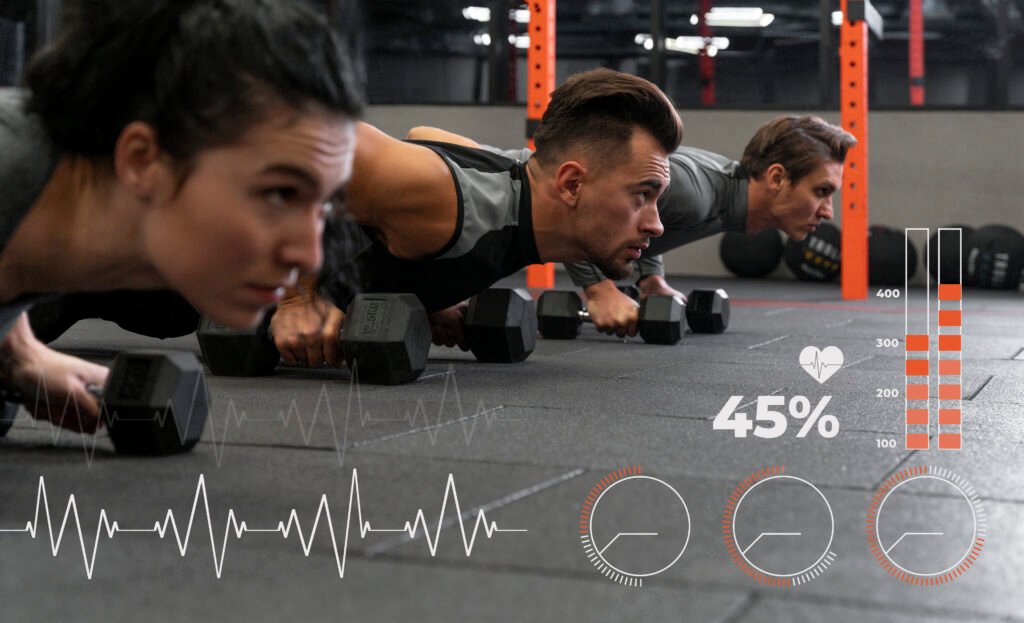
The critical variable separating injury-free athletes from chronically injured ones is training load balance, quantified by the Acute: Chronic Workload Ratio (ACWR):
- Acute Workload (AWL) = training stress accumulated in the current week (7 days)
- Chronic Workload (CWL) = average training stress over the prior 4 weeks (28-day rolling average)
- ACWR = AWL ÷ CWL
This single ratio captures the relationship between immediate training stress (fatigue) and habitual training capacity (fitness).
The Sweet Spot (0.80–1.30): Athletes operating within this range maintain optimal balance-they’re challenged sufficiently for adaptation but not so stressed that injury risk escalates. This is where athletic development occurs efficiently.
Under-Training Zone (<0.80): Athletes falling below 0.80 are under-challenged relative to their fitness capacity. They’re essentially detrained, losing physical qualities, moving into vulnerability. This occurs frequently after illness, injury recovery, or vacation periods.
Danger Zone (>1.50): Athletes spiking above 1.50 are experiencing acute stress far exceeding their chronic capacity. The mismatch signals rapid training change-sudden increases in volume, intensity, or frequency that tissues haven’t adapted to accommodate. This is the high-risk zone for non-contact injury.
Practical Example: An athlete maintaining consistent 2000 arbitrary units (AU) per week has a chronic workload of 2000 AU. If they jump to 2500 AU in one week due to tournament preparation, their ACWR = 2500/2000 = 1.25-within the sweet spot, safe. If they spike to 3000 AU (ACWR = 1.50), they’re entering danger territory. If they plunge to 1000 AU after illness (ACWR = 0.50), they’re undertrained and vulnerable when returning to normal loads.
The ACWR is not predictive of injury in individual cases, but populations show clear trends: high ACWR ratios predict injury clusters, under-training predicts vulnerability, and sweet-spot ratios predict injury resilience.
Practical Implementation: Coaches monitoring workload (distance covered, heart rate data, session-rate of perceived exertion, or GPS metrics) daily can calculate ACWR weekly and adjust training accordingly. Athletes consistently maintained in 0.80-1.30 range show 20-30% injury reduction compared to unmonitored peers.
Current Injury Prevention Programs: FIFA 11+ and Beyond

FIFA 11+: The gold-standard prevention warm-up used globally in soccer combines dynamic warm-up, neuromuscular training (balance and proprioception exercises), and plyometrics. Studies document 29-34% reduction in lower limb injuries when performed 2-3x weekly with consistent compliance. The program is free, evidence-based, and proven. Yet adoption remains below 20%, limited by coach resistance, perceived time burden, and poor player motivation.
Nordic Hamstring Exercise: A single eccentric (lengthening) hamstring strengthening drill performed twice weekly for 6-10 weeks reduces hamstring strain recurrence by 51%-the single most effective intervention for this common injury. Yet many coaches resist it, citing concern about pre-fatigue before sport-specific training.
Proprioceptive Training Programs: Systematic balance and proprioception training incorporated into routine training-using unstable surfaces, single-leg stances, perturbation challenges-reduces ankle sprains by 50%, knee injuries by 64.5%, and low back pain by 77.8%. Six years of consistent proprioceptive training in one professional basketball team achieved these reductions with 100% compliance when properly integrated into team culture.
ACL Prevention Programs (PEP, Prevent and Enhance Performance): Neuromuscular training programs emphasizing eccentric strength, plyometric control, and dynamic balance reduce ACL injury rates by 50-51%. The FIFA 11+ and similar programs demonstrate substantial ACL protection, particularly in female athletes at higher baseline ACL risk.
Load Management Systems: Real-time athlete monitoring via wearables (GPS pods, IMU sensors, heart rate monitors) tracking workload, fatigue indicators, movement quality, and HRV enables coaches to adjust training dynamically, flag overtraining risk, and reduce injury clusters by 20-30%.
Why Programs Fail: The Implementation Crisis

Programs work in research but fail in practice. The barriers are systematic:
- Coach Knowledge Gaps: Many coaches receive no formal education on injury prevention principles, exercise prescription, or program monitoring. They implement programs incompletely or with poor technique, diluting effectiveness.
- Time Competition: Coaches feel torn between prevention training and sport-specific development. With limited field access, they prioritize visible performance improvement over invisible injury prevention.
- Player Motivation: Athletes perceive prevention exercises as boring, low-priority, or stealing time from “real” training. Without intrinsic motivation or coach-driven structure, compliance plummets.
- Organizational Silos: Strength and conditioning, athletic training, sports science, and coaching operate independently with no unified prevention framework. Prevention becomes fragmented rather than systematic.
- Lack of Infrastructure: Many sports organizations-particularly at youth and amateur levels-lack access to athletic trainers, sports scientists, or medical staff who could drive prevention implementation.
- Fear of Liability vs. Profit: Medical and organizational incentives align toward acute management (which generates revenue and avoids liability via treatment) rather than prevention (which is invisible and unglamorous).
The solution requires systemic change: multidisciplinary coordination, coaching education, federate mandates, athlete engagement strategies, and-most critically-organizational commitment to prevention as foundational, not supplementary.
Separating Effective Prevention from Overrated Interventions
Overstated: Specialized Athletic Shoes and Insoles
While properly fitted insoles can reduce tibial shock and may support athletes with specific biomechanical issues, they are not injury prevention solutions. Shoe technology is heavily marketed and heavily purchased, but evidence shows insoles produce 15-22% reduction in shock at best-meaningful for comfort but not determinative for injury prevention. Proper training, strength, and load management have substantially larger injury-prevention effects.
Overstated: Peptides and Collagen Supplements
Collagen peptide supplementation shows modest benefits in specific contexts: reduced joint pain in degenerative conditions, potential mild improvements in muscle recovery post-exercise, and improved bone mineral density when combined with vitamin D and calcium. However, collagen is supplementary to proper nutrition, training, and rehabilitation-not a substitute. Evidence suggests 12-24 weeks of consistent use produces moderate effects, far smaller than those from appropriate training load management or neuromuscular training. Athletes often rely on expensive collagen protocols when basic nutrition and recovery fundamentals are unoptimized.
Evidence-Based: Eccentric Strength Training (Nordic Hamstring Exercise)
The Nordic hamstring exercise demonstrates the highest effect size for injury prevention of any single modality-51% reduction in hamstring strain recurrence. This is not marketing; this is consistent, reproducible research across thousands of athletes. The exercise is free, requires no equipment, and takes 5 minutes twice weekly. Yet adoption remains low due to perceived complexity and coach resistance.
Evidence-Based: Balance and Proprioceptive Training
Systematic proprioceptive training incorporated into routine training reduces ankle injuries by 50%, knee injuries by 64.5%, and low back pain by 77.8%. These effects rival or exceed any pharmaceutical or supplemental intervention.
Evidence-Based: Progressive Training Load Management
The training paradox research consistently demonstrates that appropriately managed high training loads-maintained within 0.80-1.30 ACWR range-reduce injury risk substantially. This requires monitoring and coach discipline but costs nothing and improves both performance and resilience.
The AIM Protocol: Assessment, Intervention, and Monitoring

Systematic injury prevention requires a structured cycle that repeats throughout the athletic season:
1. ASSESSMENT (Baseline Understanding of Individual and Team Risk)
Individual Risk Assessment:
- Movement screening: Identify biomechanical deficits (asymmetries, poor landing mechanics, postural dysfunction, movement quality)
- Injury history: Document previous injuries as the strongest predictor of future injury risk
- Training load baseline: Establish individual chronic workload and movement patterns
- Physical qualities: Test eccentric strength (Nordic hamstring strength particularly), balance/proprioceptive capacity, ankle mobility, hip stability, core control
- Sport-specific demands: Understand position-specific movement patterns and injury risk profiles
Team/Program Risk Assessment:
- Injury surveillance: Track injury incidence, severity, and recurrence rates by sport, position, injury type
- Environmental factors: Assess training facility adequacy, equipment quality, coaching expertise in prevention
- Organizational culture: Evaluate commitment to prevention, resource allocation, coach and athlete attitudes toward prevention training
2. INTERVENTION (Targeted Prevention Training)
Based on assessment findings, design individualized and team-based prevention programs addressing identified deficits:
Primary Prevention (for uninjured athletes):
- Progressive eccentric strength training (particularly Nordic hamstring exercises) if hamstring injury risk identified
- Balance and proprioceptive training, 2-3x weekly, incorporated into warmups or training routines
- Progressive training load management maintaining ACWR 0.80-1.30 ratio
- Sport-specific movement training addressing position-specific risks
- Neuromuscular control drills (plyometric, dynamic, reactive movements)
- Evidence-based warm-up protocols (FIFA 11+ or equivalent)
Secondary Prevention (for injured athletes):
- Structured rehabilitation addressing primary injury factors and correcting underlying deficits
- Progressive return-to-sport protocols maintaining tissue healing while restoring function
- Continued prevention training during rehabilitation to prevent secondary injuries and deconditioning
Tertiary Prevention (for chronic conditions):
- Maintenance programs preventing recurrence or exacerbation
- Long-term load management education
- Ongoing surveillance and re-testing
3. MONITORING (Continuous Assessment and Adjustment)
Ongoing Metrics:
- Weekly ACWR calculation ensuring athletes remain in sweet spot range
- Injury tracking: Record any injury or complaint, even minor ones
- Movement quality assessment: Video analysis of sport-specific movements, trend analysis over time
- Workload monitoring: Daily session tracking (volume, intensity, external load measures)
- Recovery indicators: Sleep quality, muscle soreness, mood, resting heart rate, HRV trends
- Compliance documentation: Prevention program adherence rates
Response Triggers:
- ACWR exceeds 1.50 → Reduce acute workload or extend loading period to lower ratio
- Movement quality deteriorates → Investigate fatigue, inadequate recovery; adjust training
- Injury cluster emerges → Immediate investigation into training loads, technique degradation, environmental factors
- Athlete reports increased soreness/fatigue → Reduce intensity, extend recovery, investigate underlying causes
Adjustment Cycles:
- Weekly: Review ACWR, adjust next week’s load
- Monthly: Comprehensive risk re-assessment, program modification based on progress
- Quarterly: Formal screening repeat, outcome evaluation, long-term adjustment
This cycle transforms prevention from static program to dynamic, responsive system continuously optimizing injury resilience.
The Multidisciplinary Team: Orchestrating Comprehensive Prevention
True prevention optimization requires coordinated expertise:
Sports Medicine Physician
- Conducts baseline movement screening and injury history evaluation
- Identifies athletes at elevated risk
- Coordinates multidisciplinary assessment
- Manages acute injuries with focus on rapid return-to-sport while maintaining long-term prevention protocols
Strength and Conditioning Coach
- Designs progressive training programs maintaining ACWR optimization
- Prescribes eccentric strength training (Nordic hamstring, eccentric calf raises, etc.)
- Manages overall training load coordination between conditioning and sport-specific training
- Educates coaches and athletes on training load principles
Physiotherapist/Athletic Trainer
- Conducts movement screening and identifies biomechanical deficits
- Prescribes corrective exercises addressing identified movement dysfunctions
- Teaches balance and proprioceptive training protocols
- Manages injury rehabilitation while maintaining prevention training
Coach
- Implements prevention programs consistently within training structure
- Educates athletes on injury prevention importance
- Monitors athlete compliance and motivation
- Reports injury concerns to medical team
- Creates psychologically safe environment where athletes openly communicate about pain or discomfort
Sports Psychologist
- Addresses mental barriers to prevention compliance (perceived boringness, lack of motivation)
- Develops athlete engagement strategies making prevention intrinsically valued
- Manages stress and mental health factors influencing injury risk
Team Physician/Medical Director
- Orchestrates multidisciplinary coordination
- Establishes prevention protocols as organizational standard
- Ensures consistency across all team members
- Allocates resources to prevention infrastructure
When siloed, these professionals work at cross-purposes. When coordinated, they multiply effectiveness, creating a comprehensive prevention ecosystem far more powerful than any single intervention.
Why Coaches Resist Prevention and How to Overcome It
Coach resistance is the primary implementation barrier. Yet it’s not irrational-coaches face genuine constraints:
The Time Problem: Coaches report insufficient training time to incorporate prevention programs without sacrificing sport-specific development. The solution is reframing prevention not as separate training but as integrated enhancement-FIFA 11+ replaces traditional warm-up, Nordic hamstring exercises precede field work, proprioceptive training occurs within movement drills. Prevention becomes embedded in standard practice, not an addition.
The Knowledge Problem: Many coaches received minimal education on injury prevention science or program implementation. Solution: Federate-mandated coaching workshops specifically training coaches to deliver prevention protocols with proper technique, modify exercises for individual needs, and troubleshoot compliance barriers.
The Credibility Problem: Without seeing immediate performance improvement, coaches doubt prevention’s value. Solution: Education on the training paradox and mechanism by which prevention builds resilience that enables higher performance sustainability.
The Structural Problem: When athletic trainers are absent or part-time, coaches default to minimum-viable care. Solution: Organizational investment in sports medicine infrastructure-at least part-time certified athletic trainer coverage-to support coach education and program implementation.
Action Points: Building Your Injury Prevention Protocol
Week 1-2: Assessment and Baseline
- Comprehensive movement screening: bilateral comparison, landing mechanics, balance capacity, eccentric strength testing
- Injury history documentation: previous injuries, recurrent problem areas, recovery trajectories
- Training load baseline: 2-week monitoring establishing individual chronic workload patterns
- ACWR calculation establishing baseline ratio
- Sport-specific risk analysis: identify position-specific and sport-specific injury patterns
Week 3-4: Program Design
- Identify 2-3 priority injury prevention targets (e.g., hamstring strain risk, ankle stability deficits)
- Select evidence-based interventions addressing each target
- Integrate into existing training schedule without creating time burden
- Design progressive loading ensuring ACWR maintenance
- Establish monitoring metrics and tracking systems
Week 5-8: Implementation and Adaptation
- Begin prevention programming with close coaching supervision ensuring proper technique
- Daily ACWR monitoring, weekly load adjustments
- Weekly compliance tracking
- Monthly movement re-assessment checking for adaptation
- Address barriers to compliance proactively (boring exercises reframed as performance-critical, time managed through integration)
Week 9-12: Optimization and Sustainability
- Establish routines making prevention automatic rather than burdensome
- Engage athletes in progress discussions-show movement quality improvements, injury reduction, performance sustainability
- Re-screen athletes identifying any emerging risk factors
- Modify programs based on individual response
Months 4-12: Continuous Monitoring
- Weekly ACWR maintenance
- Monthly movement re-assessment
- Quarterly comprehensive re-screening
- Season-long injury tracking with rapid investigation of any clusters
- Year-round program adjustment maintaining individualization simply words about the content